Published: 2022-10-294 backlinks
Prospect Theory
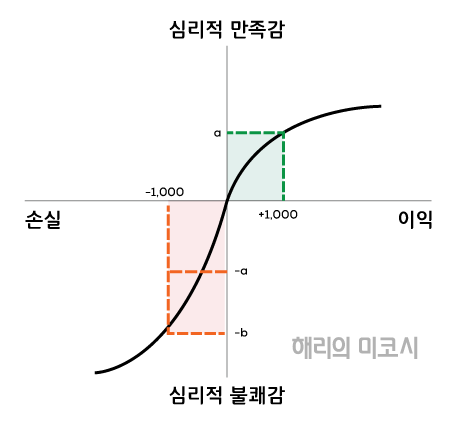
Divide gains and combine losses
Overview
A new value function proposed by Daniel Kahneman and Tversky in 1979, characterized by reference dependence, diminishing sensitivity, and loss aversion.
Behavioral patterns according to the theory
- The emotion of loss depends on the reference point
- Isn't that why people use Technical Analysis to find out the reference point?
- People prefer a certain gain over an uncertain gain
- People prefer an uncertain loss over a certain loss
Because of this, they sell quickly when stocks rise and hold onto declining stocks for too long
Application strategies
- Divide gains and combine losses
- Combine when gains are large, divide when losses are large
- Pay attention to loss aversion
- Companies' compensation sales strategies
- Guide toward providing additional benefits
Examples from companies
- Manipulate it so that a single gain feels like many small discounts, because the utility of one gain is small
- Suppress the intensity of loss through compensation sales
References
Related Topics
LIST file.aliases FROM [](#)
WHERE contains(topics, this.file.link) AND contains(tags, "#node/term")
GROUP BY link(file.link, file.aliases[0])
Topics: economic theory,Loss aversion
Category: Wiki/Economy
Backlinks4
There's Nothing to Gain from Being Pessimistic about a Situation
EvergreenCreated: 23-04-06Updated: 26-08-24
People react in two ways to uncertainty
EvergreenCreated: 25-04-15Updated: 26-08-25
Loss aversion
Wiki/EconomyCreated: 22-10-29Updated: 26-08-24
Behavioral Economics
Wiki/EconomyCreated: 22-10-29Updated: 26-08-24